Why Your Best Sales Tool Isn’t Your Portfolio, It’s Your Material Knowledge
A great portfolio gets you in the door. But it’s material knowledge that closes the project, builds the relationship, and keeps clients coming back.
When a client asks why one sign costs more than another, why a specific material is better for their environment, or whether their signage meets ADA requirements, the sign shop that answers with confidence wins. Not because they were sold a product, but because they demonstrated expertise the client couldn’t get anywhere else.
That expertise is your real sales tool. And when it’s backed by a manufacturing partner like Gemini, it becomes a competitive advantage that’s hard to replicate.
The Sales Conversation That Closes Projects
Most sign shop sales conversations tend to follow a familiar pattern: the client describes what they want, the shop quotes a price, and the decision often times comes down to cost. But the shops that consistently get a better chance to win projects flip that dynamic. They lead with material knowledge.
Instead of asking, “What’s your budget?” they ask, “What environment will this sign live in?” They explain why plastic letters perform differently than metal letters in a coastal climate. They help the client understand that the right material choice today prevents callbacks, replacements, and brand inconsistency tomorrow.
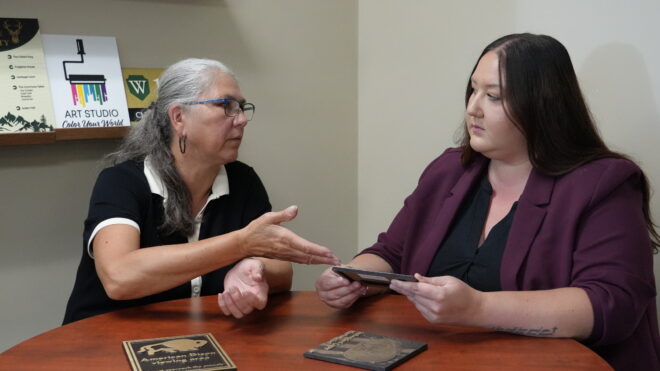
This approach does three things at once:
- Builds trust early: Clients feel they’re working with an expert, not a vendor.
- Reduces rework: The right material is spec’d from the start, avoiding change orders and installation issues.
- Justifies investment: When clients understand the value story behind a material, price becomes a secondary concern.
The result? More confident recommendations, stronger client relationships, and fewer projects that go sideways because the solution didn’t align with the client’s needs.
Material Expertise Builds Trust Before the Quote
Trust is the currency of sign sales. Clients, whether they’re facility managers, business owners, or marketing directors, may not know the complexities of fabrication. They may have a Pinterest board of inspiration photos or use AI to generate designs but they may not understand of which materials can deliver that look or perform in their environment within their budget and timeline.
That knowledge gap is where a knowledgeable sign shop creates value. When you can explain the difference between Flat Cut Acrylic and Laminate signage, or walk a client through why Lit Fabricated Metal commands a premium because of its durability and after-hours visibility, you’re not just selling a product. You’re selling expertise the client can’t easily find elsewhere.
Sign professionals that quote without context leave value on the table because their clients compare line items and may choose the cheapest option. But sign professionals that frame the conversation around material performance, lifespan, and application fit give clients a reason to choose quality. And they position themselves as the partner who knows enough to get it right the first time.
Scenario: When Material Knowledge Makes the Sale
Consider a sign shop that primarily handles print work—banners, vehicle wraps, flat signage. They’ve done a handful of lightweight dimensional signage orders, but they’re starting to get requests for more. A client comes in needing exterior lettering for a new retail storefront in a coastal climate.
- Without material knowledge: The shop defaults to what they started to learn channel letters with trim cap channel construction. They quote the job, win on price, and install the sign. Eighteen months later, the trim cap is cracking from UV exposure and salt air. The client calls back, frustrated. The shop replaces the letters at their own cost or loses the client’s trust entirely.
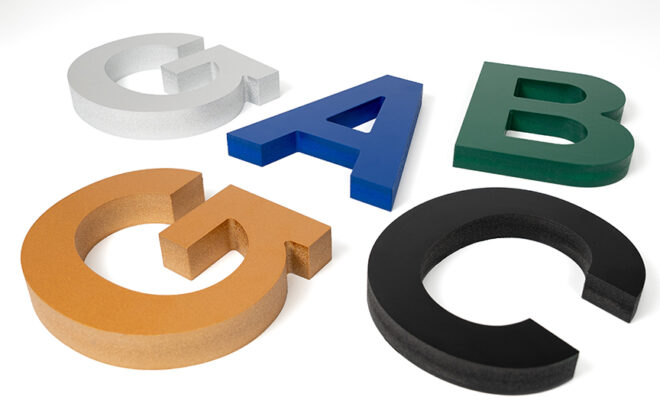
- With material knowledge: The same shop recognizes that a coastal environment demands a more durable solution. Lit Formed Plastic letters are built in with a trimless construction and come with a lifetime guarantee. They explain why the higher upfront investment pays for itself: no trim cap to deteriorate, no cracking, no replacement in 18 months. They also order an essential sample kit from Gemini so the client can see and feel the material difference before deciding. The client chooses up. The sign lasts for years.
This is the difference material knowledge makes in a single sale and it’s amplified by the tools Gemini provides: the Gemini Sign Assistant for quick material and capability questions, product catalogs, and sample kits that let you put real materials in a client’s hands. When you walk a client through the trade-offs with samples on the table and data to back your recommendation, you’re not quoting, you’re instead consulting. For clients focused on price, your consultation may look a little different, not amounting to a higher-value solution while staying within their goals.
Price Stability: Quote with Confidence in Any Market
In an environment where tariffs and material cost fluctuations are creating uncertainty across the manufacturing sector, sign shops face a real challenge: how do you quote a project today when you’re not sure what your costs will look like in three months?
This is where Gemini’s approach to partner pricing becomes a strategic advantage – providing year-round pricing. That means partners can quote projects with greater confidence, knowing that the pricing they receive from Gemini is designed to hold steady—regardless of what’s happening in the broader trade landscape.
For sign shop owners, this matters in practical ways:
- More accurate quotes: Stable partner pricing helps reduce the gap between a quoted price and a sudden cost increase.
- Faster sales cycles: When you don’t have to hedge your pricing or add contingency for material cost volatility, clients get clear numbers and decisions happen faster.
- Stronger client relationships: When you can tell a client, “Our pricing is stable,” it reinforces that you’re a partner who manages the details, so they don’t have to.
Price stability isn’t just a financial benefit. It’s a sales tool. In a market where competitors may be raising prices or adding surcharges, the ability to hold firm on pricing gives your shop a compelling story to tell and a reason to win.
Capabilities That Expand What Your Shop Can Sell
Material knowledge is only as powerful as the capabilities to support it. A shop can know everything about signage materials, but if they can’t deliver on the specifications their clients need, that knowledge stalls at the proposal stage.
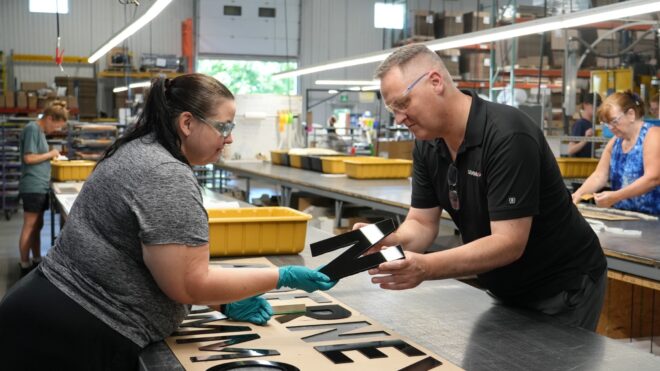
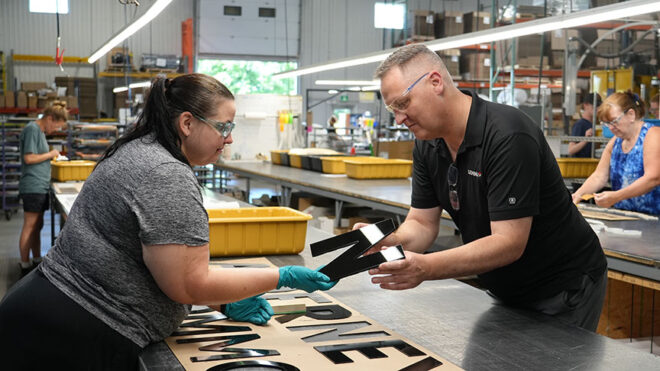
That’s where Gemini’s manufacturing capabilities create a multiplier effect. With over 800,000 square feet of production space across multiple North American facilities, Gemini performs the following processes:
- Laser, router, and waterjet cutting
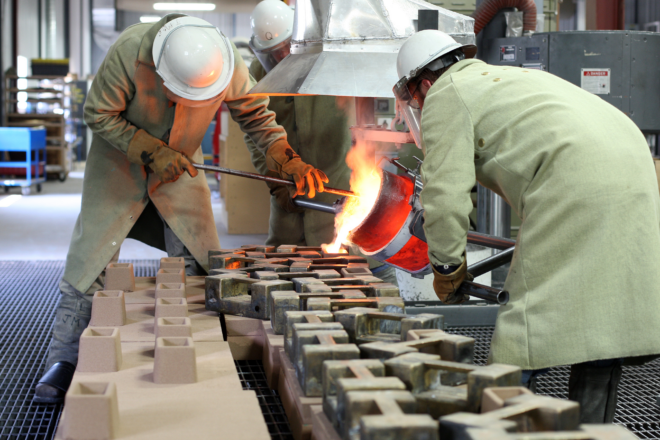
- Casting foundries
- Thermoforming
- UV printing and custom polyurethane painting
- Powder coating and anodizing
- UL listing and LED population
- Welding, assembly, and in-house laboratory testing
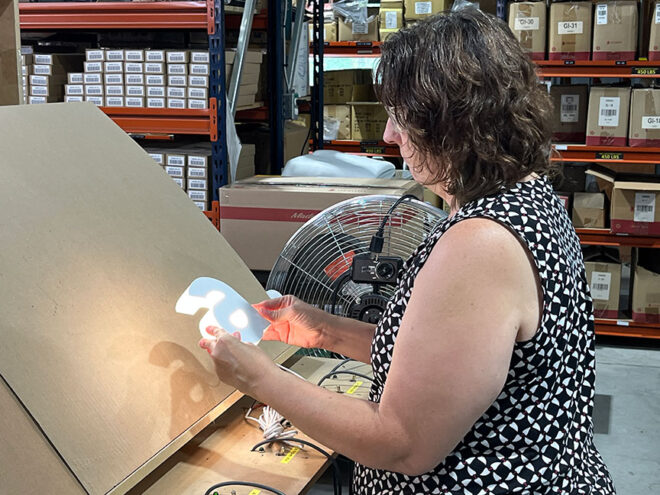
This is equipment and infrastructure that most local sign shops can’t or won’t invest in. The capital cost of a foundry, a waterjet cutter, or a UV printing system is prohibitive for a single shop. But through Gemini’s partner network, shops gain access to all of it without the overhead.
The practical benefit is simple: when a client asks for something beyond the basics, you can say yes. You don’t have to turn down work because you lack the equipment. Gemini makes it easy for partners to say yes to projects that would otherwise be out of reach.
Turning Material Knowledge into a Sales System
Knowing your materials is the foundation. Turning that knowledge into a repeatable sales process is what separates good shops from great ones. Here’s a practical framework:
- Lead with questions, not quotes.
Before discussing price, ask about the installation environment, expected lifespan, brand standards, and compliance requirements. These questions position you as a consultant and surface the information you need to recommend the right material.
- Build a material comparison into every proposal.
Don’t just quote one option. Present a good/better/best framework- value material, standard material, premium material—with a clear explanation of what each delivers. Clients who see the trade-offs make better decisions and often choose up.
- Use Gemini’s capabilities as your differentiator.
When a client needs something your local competitors can’t produce, make sure they know you can. Your access to Gemini’s 800,000+ square feet of manufacturing capacity is a selling point, not just a back-office detail.
- Leverage price stability in your sales narrative.
In a market where tariffs are creating uncertainty, your ability to offer stable pricing is a competitive advantage.
- Reference the Lifetime Guarantee.
Gemini products are backed by a Lifetime Guarantee. That’s not just a warranty; it’s a closing tool. When clients know the sign is guaranteed for life, the investment becomes easier to justify.
- Put samples and tools in the client’s hands.
Show clients the material difference in person. Leverage Gemini’s sample kits and use the Gemini Sign Assistant to answer quick material and capability questions on the spot. When clients can see, touch, and compare materials, the right choice becomes obvious and so does your expertise.
Material Knowledge is Your Key to Growth
Material knowledge is the sales tool most sign shops underestimate. It’s what turns a price conversation into a value conversation, a one-time project into a long-term relationship, and a standard sign into a solution that fits the client’s needs perfectly.
When that knowledge is backed by Gemini’s manufacturing capabilities, your shop gains a competitive edge that’s difficult to replicate. The shops that grow aren’t the ones with the biggest portfolios. They’re the ones whose clients trust them to know what works.
Explore Gemini’s full offering and discover how deep material expertise can transform your next sales conversation. To learn more about what Gemini can do, visit https://geminimade.com/signage/capabilities/.
FAQs
Why does material knowledge matter more than a portfolio?
A portfolio shows what you’ve done. Material knowledge proves you understand what will work for each client’s specific needs. It builds trust early, reduces the chance of spec errors and rework, and positions your shop as a consultant rather than a commodity vendor. Clients choose experts they trust over portfolios they admire.
What can Gemini manufacture that local sign shops can’t?
Gemini operates over 800,000 square feet of production space with capabilities including casting foundries, laser and waterjet cutting, CNC machining, UV printing, powder coating, UL listing, and LED population. Through Gemini’s partner network, shops gain access to all of these capabilities without the overhead.
How can I use material knowledge to upsell clients?
The most effective upsell approach is a good/better/best material comparison built into every proposal. When clients see the trade-offs—durability, warranty, appearance, and lifespan—they often choose up. Pair that with Gemini’s Lifetime Guarantee and stable pricing to remove the risk from the upgrade decision.
How does Gemini make it easier for sign shops to say yes to complex projects?
Gemini’s in-house capabilities cover from casting and fabrication to UV printing and LED population. Partners don’t need to invest in equipment or turn down specialized work. Gemini handles the manufacturing complexity so sign shops can focus on design, sales, and client relationships.